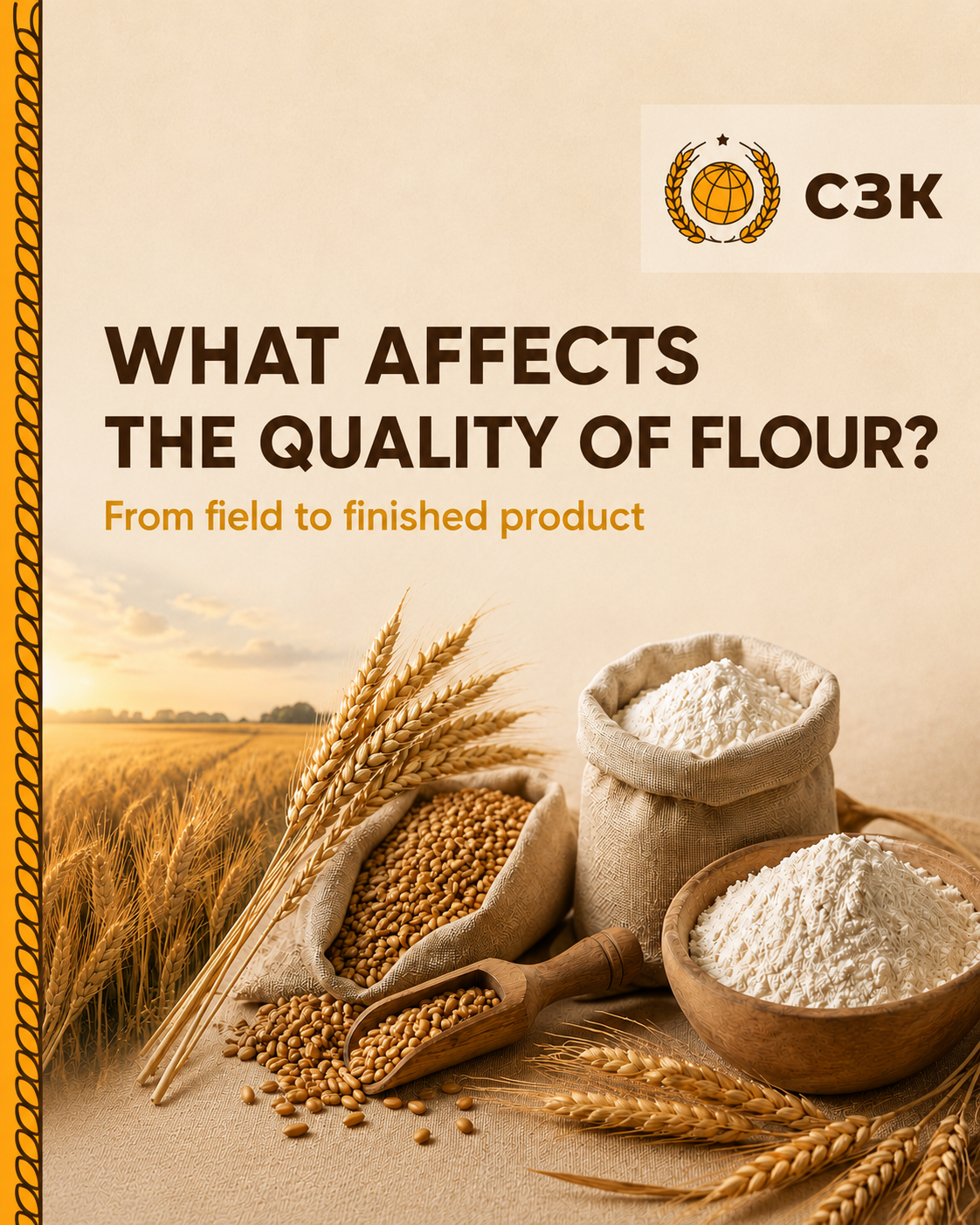
🌾 From Field to Mill: What Really Determines Flour Quality?
When people think about high-quality flour, they often focus on the milling process. In reality, flour quality is determined long before the grain reaches the mill. It begins with the choice of wheat variety, continues through cultivation and harvesting, and ends with careful processing.
Every stage of this journey plays a crucial role in the final product.
🌱 Wheat Variety
Not every wheat variety is suitable for producing high-quality baking flour.
Millers typically select wheat with high protein and gluten content, as these characteristics determine dough strength, elasticity, loaf volume, and the overall performance of flour in baking applications.
The right variety provides a strong foundation for consistent flour quality.
☀️ Climate and Growing Conditions
Environmental conditions have a significant impact on grain quality.
Among the most important factors are:
Even the same wheat variety can produce different quality characteristics when grown under different climatic conditions.
🌾 Soil Fertility and Plant Nutrition
Healthy soil is essential for producing high-quality grain.
Wheat requires a balanced supply of:
Nitrogen contributes to higher protein content, while phosphorus and potassium support proper plant development and grain formation.
Both nutrient deficiencies and excessive fertilization may negatively affect grain quality, making balanced crop nutrition essential.
🚜 Harvesting and Post-Harvest Handling
Proper timing of harvest is just as important as cultivation.
Delayed harvesting or exposure to excessive moisture can reduce grain quality and storage stability.
After harvesting, wheat undergoes several important stages:
Only after these procedures is the grain ready for milling.
🏭 Milling Technology
Modern milling equipment helps preserve the natural baking properties of wheat.
Advanced milling technology ensures consistent flour characteristics, including:
These parameters are essential for industrial bakeries and food manufacturers seeking consistent production results.
💡 Expert Insight
Two batches of flour of the same grade may perform differently in baking if the wheat was grown under different soil and climatic conditions.
This is why professional flour producers evaluate not only the milling process but also the quality of raw grain before production begins.
📌 Conclusion
High-quality flour is the result of careful control throughout the entire production chain — from selecting the right wheat variety and managing crop nutrition to harvesting, storage, and precision milling.
Reliable suppliers understand that excellent flour does not begin in the mill. It begins in the field.
SGC Novosibirsk (Siberian Grain Company Novosibirsk LLC) supplies high-quality agricultural products to international partners, ensuring strict quality control at every stage — from grain selection to export-ready products.
If you are looking for a reliable supplier of wheat flour or other grain products, our team will be pleased to discuss your requirements.
📩 Submit a request
📞 +7-383-209-13-83
📧 support@sibzerno.com
🌐 sibzerno.com
If you would like to submit a request, please send it via this link
SGC Novosibirsk
Siberian Grain Company Novosibirsk LLC
When people think about high-quality flour, they often focus on the milling process. In reality, flour quality is determined long before the grain reaches the mill. It begins with the choice of wheat variety, continues through cultivation and harvesting, and ends with careful processing.
Every stage of this journey plays a crucial role in the final product.
🌱 Wheat Variety
Not every wheat variety is suitable for producing high-quality baking flour.
Millers typically select wheat with high protein and gluten content, as these characteristics determine dough strength, elasticity, loaf volume, and the overall performance of flour in baking applications.
The right variety provides a strong foundation for consistent flour quality.
☀️ Climate and Growing Conditions
Environmental conditions have a significant impact on grain quality.
Among the most important factors are:
- the number of sunny days;
- temperature during grain filling and maturation;
- rainfall distribution;
- soil composition and fertility.
Even the same wheat variety can produce different quality characteristics when grown under different climatic conditions.
🌾 Soil Fertility and Plant Nutrition
Healthy soil is essential for producing high-quality grain.
Wheat requires a balanced supply of:
- nitrogen;
- phosphorus;
- potassium;
- essential micronutrients.
Nitrogen contributes to higher protein content, while phosphorus and potassium support proper plant development and grain formation.
Both nutrient deficiencies and excessive fertilization may negatively affect grain quality, making balanced crop nutrition essential.
🚜 Harvesting and Post-Harvest Handling
Proper timing of harvest is just as important as cultivation.
Delayed harvesting or exposure to excessive moisture can reduce grain quality and storage stability.
After harvesting, wheat undergoes several important stages:
- cleaning;
- drying to safe moisture levels;
- laboratory quality testing;
- proper storage under controlled conditions.
Only after these procedures is the grain ready for milling.
🏭 Milling Technology
Modern milling equipment helps preserve the natural baking properties of wheat.
Advanced milling technology ensures consistent flour characteristics, including:
- stable ash content;
- controlled moisture;
- uniform particle size;
- reliable baking performance.
These parameters are essential for industrial bakeries and food manufacturers seeking consistent production results.
💡 Expert Insight
Two batches of flour of the same grade may perform differently in baking if the wheat was grown under different soil and climatic conditions.
This is why professional flour producers evaluate not only the milling process but also the quality of raw grain before production begins.
📌 Conclusion
High-quality flour is the result of careful control throughout the entire production chain — from selecting the right wheat variety and managing crop nutrition to harvesting, storage, and precision milling.
Reliable suppliers understand that excellent flour does not begin in the mill. It begins in the field.
SGC Novosibirsk (Siberian Grain Company Novosibirsk LLC) supplies high-quality agricultural products to international partners, ensuring strict quality control at every stage — from grain selection to export-ready products.
If you are looking for a reliable supplier of wheat flour or other grain products, our team will be pleased to discuss your requirements.
📩 Submit a request
📞 +7-383-209-13-83
📧 support@sibzerno.com
🌐 sibzerno.com
If you would like to submit a request, please send it via this link
SGC Novosibirsk
Siberian Grain Company Novosibirsk LLC